


News
Pay attention to more news and learn more about industry trends.
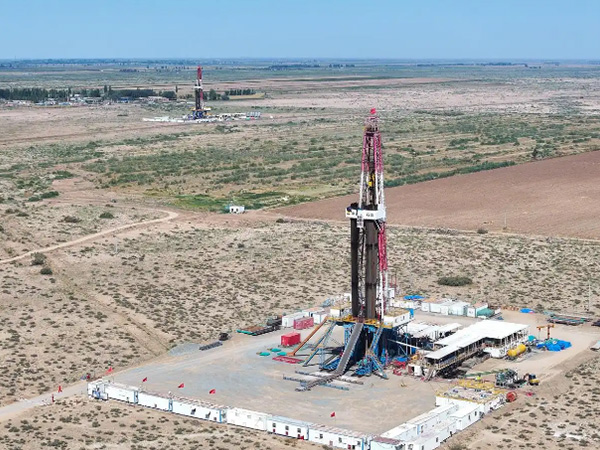
On March 26, reporters learned that the Ma Bei shale oil wells Ma Ye 103X and Xia 212X in Xinjiang Oilfield both achieved high-yield oil flows exceeding 100 tons per day. This marks a critical breakthrough in the exploration and development of "medium-grade sweet spots" for shale oil in the Ma Bei area, confirming the feasibility of economically viable deep-shale oil development.
The Ma Bei shale reservoirs are buried between 4,500 and 6,100 meters deep, representing typical continental mixed-type shale oil deposits with complex reservoir genesis and extremely high extraction difficulty. The recent high-yield success stems from the Ma Hu Exploration and Development Project Department of Xinjiang Oilfield's persistent integration of geological and engineering approaches, working collaboratively with multiple institutions including the Exploration and Development Research Institute. Based on precise geological research, the project team scientifically identified high-quality "medium-grade sweet spot" reservoir zones, optimized well placement and drilling plans, and accurately navigated through 2,000-meter horizontal sections, laying a solid foundation for efficient development.
Technological innovation is the core driver behind profitable deep-shale oil development. Well Ma Ye 103X was the first to apply suspended proppant technology, achieving 100% compliance with the required 3,975 cubic meters of sand volume, effectively connecting natural fractures with artificial fractures and establishing efficient fluid flow pathways. Meanwhile, Xia 212X innovatively adopted a differentiated carbon injection technique known as "staged segmented energy replenishment," significantly enhancing reservoir modification and substantially increasing single-well productivity, thus opening up a new technical pathway for profitable deep-shale oil development.
During the testing phase, the technical team precisely optimized production regimes for both wells. At Ma Ye 103X, under strict adherence to well control safety standards, the choke size was gradually increased from 3 millimeters to 4.5 millimeters, successfully achieving a pivotal transition from stable production to high-yield output.

Add: No. 245, Hangyin Road, Zhuqiao Town, Pudong New Area, Shanghai
Tel: +86-21-68780990
Site: www.Hwvalve.com
E-mail: sales@hwvalve.com
 HGWA No. 31011502009128SitemapXMLHGWA No. 31011502009128SitemapXML
 Home
Home Products
 Industry
 Tel
Tel